
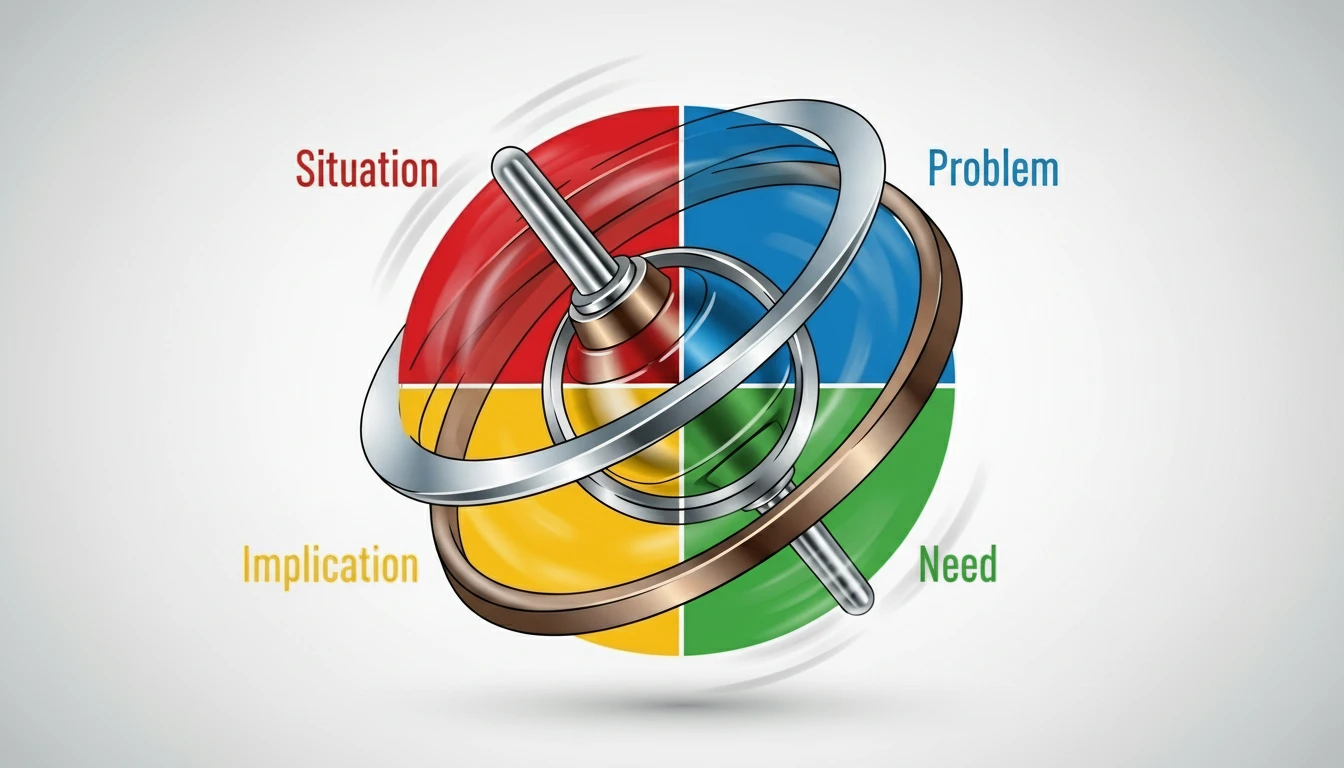
SPIN Selling is the most researched sales methodology in history. Based on 35,000 sales calls, it's still the gold standard for complex B2B sales. Here's how to use it.
What Is SPIN Selling?
SPIN = Situation + Problem + Implication + Need-Payoff
Created by Neil Rackham in the 1980s after analyzing thousands of successful sales calls. The core insight: In complex sales, asking the right questions matters more than delivering the perfect pitch.
Why SPIN Works
Traditional selling: "Here's what we do, want to buy?"
SPIN Selling: "Tell me about your challenges... How is that affecting you... What would solving it mean for your business?"
The difference: Prospects convince themselves to buy instead of you convincing them.
The 4 Stages of SPIN
S = Situation Questions
Purpose: Understand the prospect's current state
When to use: Early in discovery
Warning: Don't ask too many—they're boring and feel like interrogation
Example Questions:
- Can you walk me through your current process for [task]?
- What tools/systems are you currently using?
- How many people are on your team?
- What does your typical workflow look like?
- How long have you been using your current solution?
- What's your current budget for this area?
- Who's responsible for [specific task]?
Pro tip: Do your homework first. Don't ask situation questions you could've Googled.
P = Problem Questions
Purpose: Uncover pain points and dissatisfactions
When to use: After understanding their situation
Key insight: People buy to solve problems, not because features are cool
Example Questions:
- What's the biggest challenge you're facing with that process?
- What's frustrating about your current solution?
- What takes longer than it should?
- Where are you losing the most time/money?
- What keeps you up at night about [area]?
- Are there any bottlenecks in your workflow?
- What would you change if you could wave a magic wand?
Red flag: If they don't have problems, they don't need your solution.
I = Implication Questions
Purpose: Amplify the pain by exploring consequences
When to use: After identifying a problem
Critical insight: This is what separates SPIN from other methodologies. Make the cost of inaction crystal clear.
Example Questions:
- How does that challenge impact your team's productivity?
- What's the cost of this problem per month/year?
- How many deals are you losing because of this?
- What happens if you don't fix this in the next 6 months?
- How is this affecting your customers?
- Is this preventing you from hitting your revenue goals?
- What downstream effects is this creating?
- How much time is your team wasting on manual work?
Example in action:
Prospect: "Our reporting takes forever."
You: "How long does it take?" (Problem)
Prospect: "About 10 hours per week."
You: "So that's 520 hours per year. At your team's salary, that's $26,000 in
lost productivity. What could your team accomplish with an extra 520 hours?" (Implication)
N = Need-Payoff Questions
Purpose: Get prospects to articulate the value of solving the problem
When to use: After amplifying the pain
Magic: Prospects sell themselves when they describe the benefits
Example Questions:
- If you could solve this problem, how would that help your team?
- What would it mean for your business if this was 10x easier?
- If you had those 10 hours back each week, what would you do with them?
- How would solving this help you hit your Q4 goals?
- What impact would that have on your customers?
- How would your team's job change if this was automated?
- What would the ROI look like if you could cut this time in half?
Why this works: People believe their own conclusions more than yours.
The SPIN Call Flow
1. Opening (2 min): Build rapport, set agenda
2. Situation (5 min): Understand their world (ask 3-5 questions max)
3. Problem (10 min): Uncover challenges (dig deep on 2-3 problems)
4. Implication (10 min): Explore consequences (make pain vivid)
5. Need-Payoff (5 min): Paint the future (let them sell themselves)
6. Close (3 min): Next steps
Common SPIN Mistakes
- Skipping straight to pitch: You haven't earned it yet
- Too many situation questions: Boring and feels like an interrogation
- Weak implication questions: "Is that a problem?" doesn't amplify pain
- Answering your own need-payoff questions: Let THEM tell you the benefits
- Using SPIN as a script: It's a framework, not a checklist
When to Use SPIN
Best for:
- Complex B2B sales
- High-value deals ($10K+)
- Long sales cycles (30+ days)
- Multiple decision-makers
Not great for:
- Transactional sales
- Low-ticket items
- One-call closes
SPIN vs Other Methodologies
- SPIN: Question-led, builds urgency through implications
- Challenger: Teaches prospects something new, then sells
- Solution Selling: Focuses on diagnosing pain, prescribing solutions
- MEDDIC: Qualification-heavy (Metrics, Economic Buyer, Decision Criteria, etc.)
Can you combine them? Absolutely. Use SPIN for discovery, Challenger for differentiation.
Practice Exercise
Scenario: Selling marketing automation software to a 50-person SaaS company.
Try writing:
- 2 Situation questions
- 2 Problem questions
- 2 Implication questions
- 2 Need-Payoff questions
Your discovery calls will never be the same.
Conclusion
SPIN isn't magic—it's structured discovery. Ask better questions. Listen more than you talk. Let prospects convince themselves.
The best sales reps don't have the best pitch. They have the best questions.
Want to master objection handling too? Read How to Handle Sales Objections.